

A heat pump holding its own
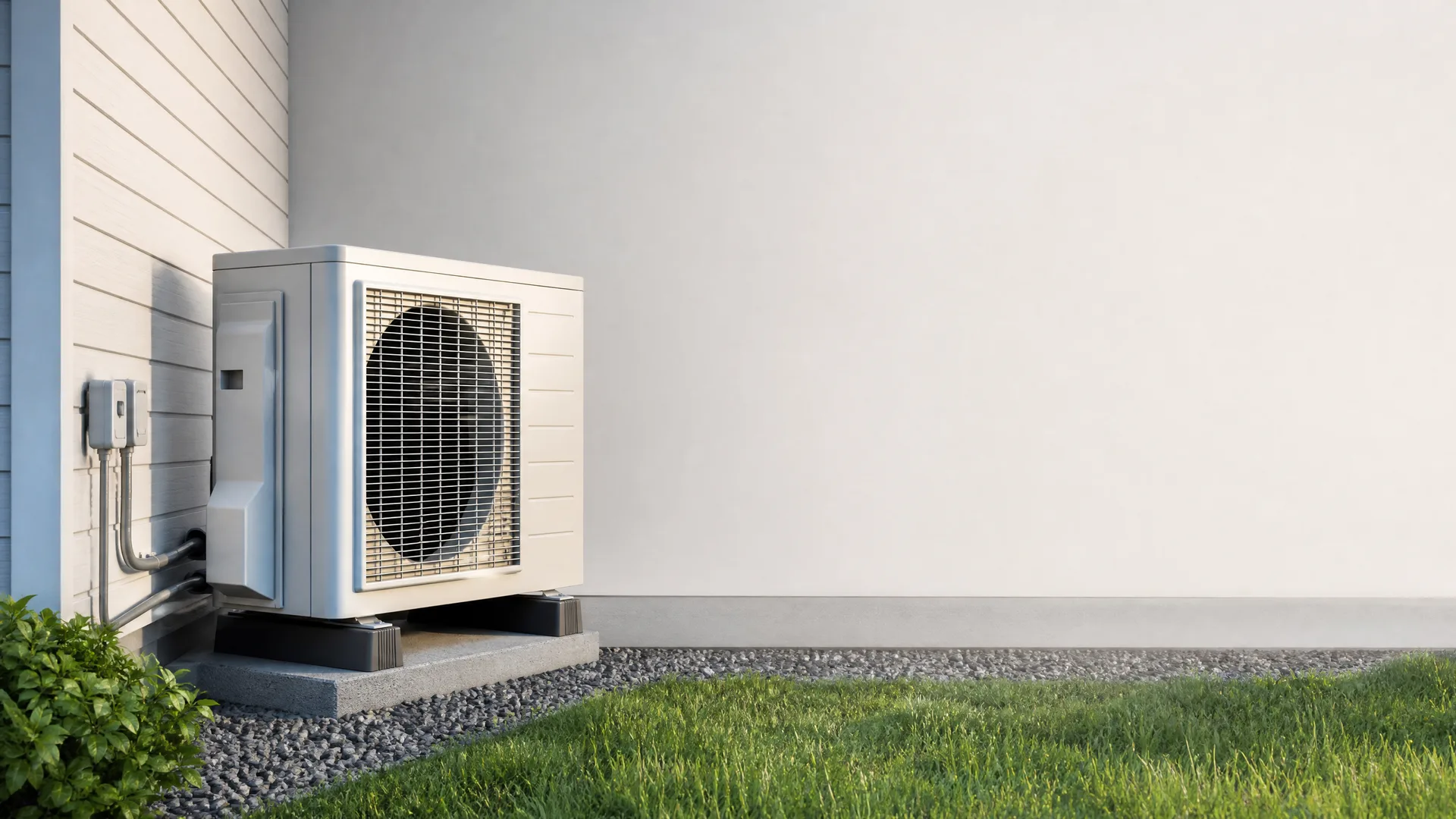
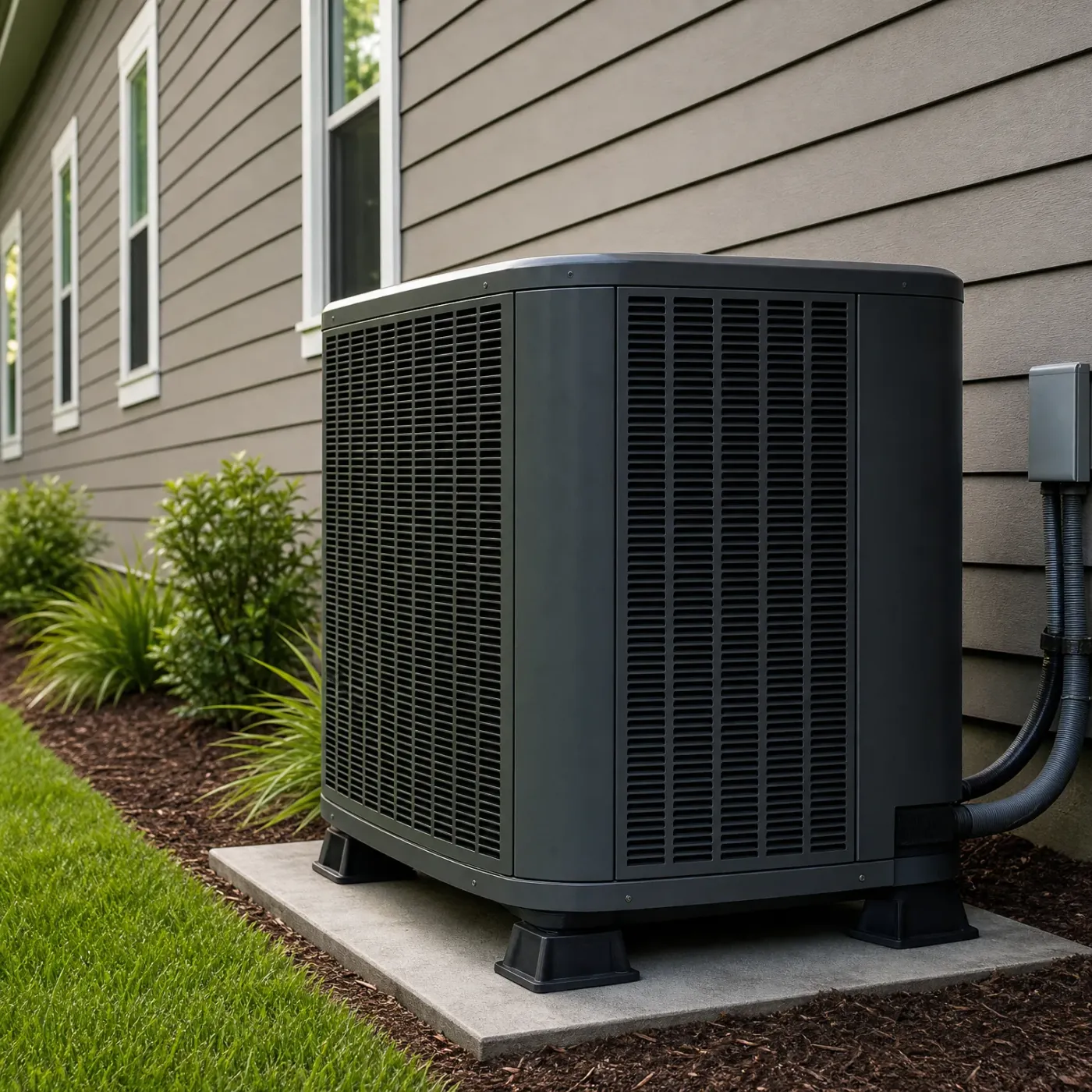
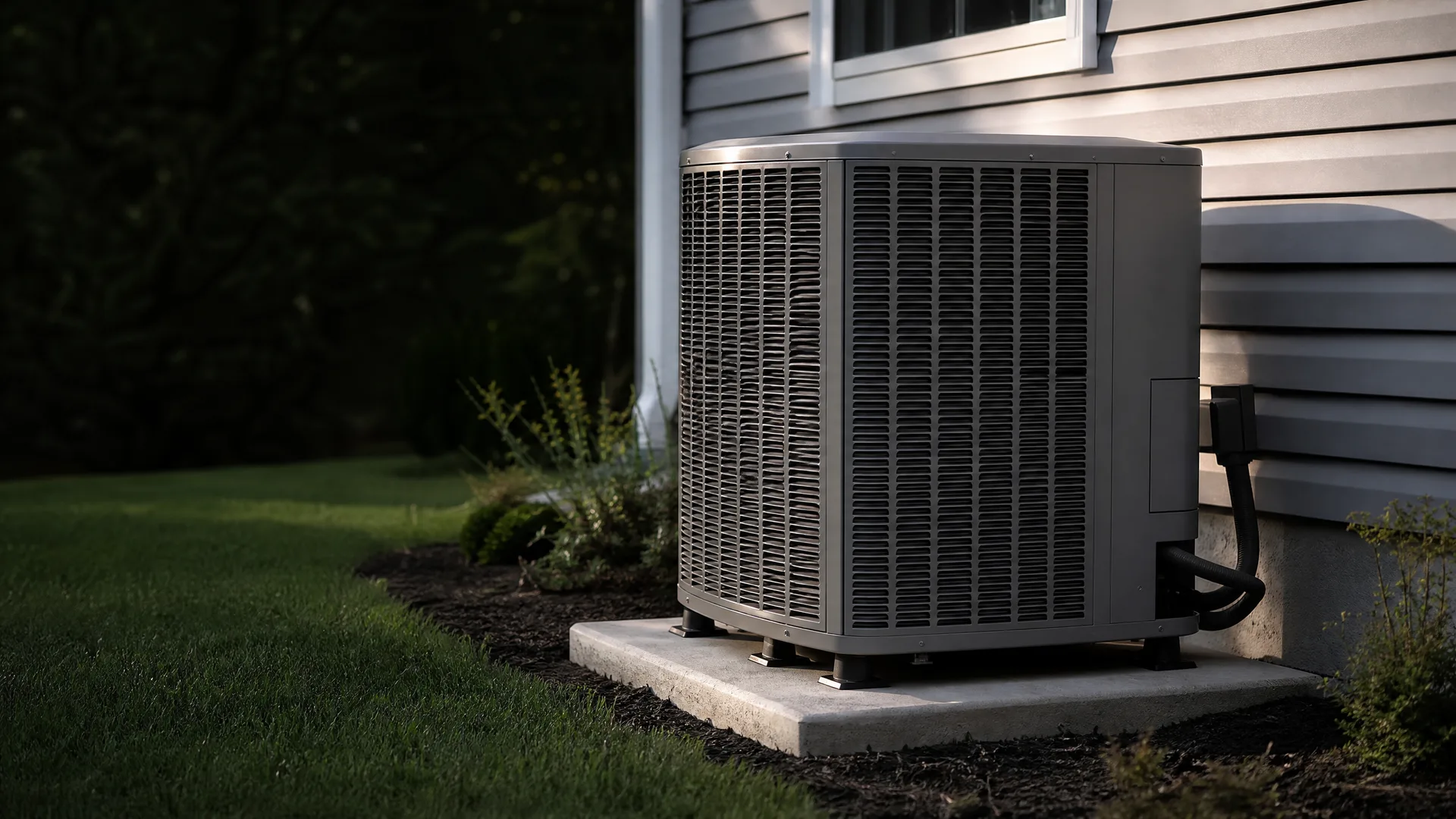
This is what a working heat pump looks like on a cold morning. It sits on its pad, lines running clean to the disconnect, and keeps pulling heat from the outside air without any backup coil switching on.
A local installer who puts in heat pumps gets your project.
Get a heat pump proMost homes in Arizona don't need backup heat for a heat pump. A heat pump moves heat instead of burning gas to make it, and it only struggles to pull heat from outside air once temperatures drop into the 20s and below for stretches at a time. That barely happens here. Winters are mild enough that the heat pump can handle the whole season on its own, running on electricity the same way it does for cooling in summer. Some systems still come with a small electric backup coil built in for the rare cold snap, but it's there as insurance, not something your system leans on. If your heat pump is struggling to keep up on a cold morning, that's usually a sign something else is wrong, not proof you need a backup system installed.
Below freezing, a heat pump still pulls heat from outside air. It only loses ground when the air gets cold enough that there's little heat left to move, and that stretch is short and rare in Arizona. On the handful of nights it dips into the 20s, the system slows down but keeps running. It doesn't shut off and wait for something else to take over.
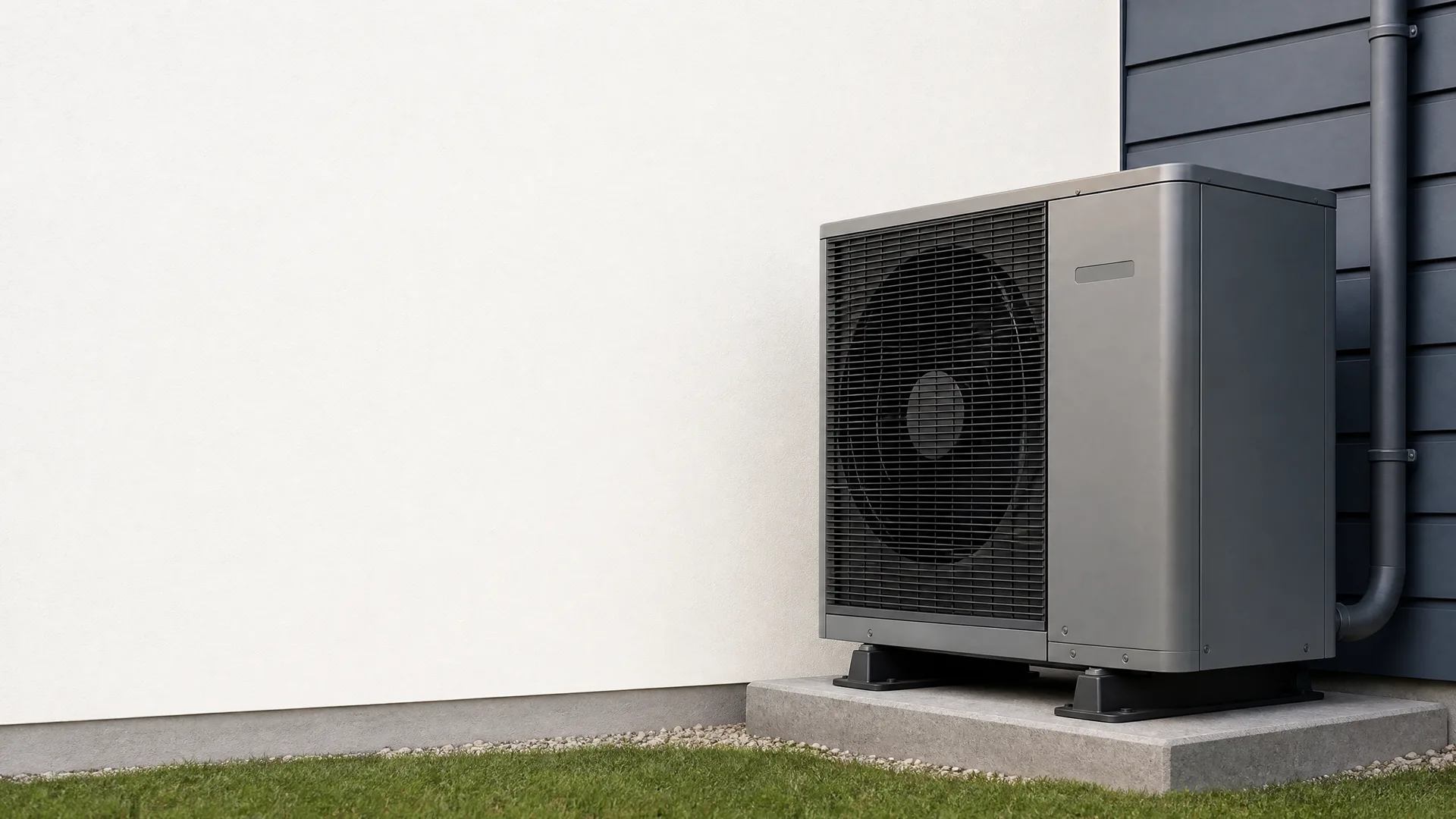
Some heat pumps come with electric strip heat built in for the coldest mornings. It's a backup, not a second system, and it only kicks on when the heat pump alone can't keep up with the thermostat setting. In a lot of Arizona homes it runs a handful of hours a year, if that, since the outdoor air rarely gets cold enough to need it.
On the nights that drop near freezing, you might notice the air coming out of the vents feels cooler than usual, or the heat pump runs longer to hold the temperature you set. That's the system working harder to pull heat out of colder air, not a sign anything is wrong. If the thermostat shows a few degrees below your setting on those mornings, or the system seems to run nearly nonstop before sunrise, that's worth having looked at. Left alone, a heat pump that's struggling in mild cold usually points to something else going on with it, like a low charge, not the weather being too much for it.




The coil sits inside the air handler, not outside with the heat pump. When your thermostat calls for backup heat, it's asking that coil to turn on, usually because the indoor temperature has drifted two degrees below what you set. Both the outdoor unit and the coil can run together at that point, which is normal. Check your thermostat display on a cold morning and you may see "AUX" or "EM HEAT" lit up. That's just telling you the coil is drawing power right then. Emergency heat is different. It's a setting you choose yourself, and it shuts the outdoor unit off entirely, leaving the coil to do all the work alone. Either way, that coil makes heat by resistance, the same way a toaster does, instead of moving heat the way the heat pump does outside. That means it costs more per hour to run. In Arizona, where the heat pump rarely struggles, you shouldn't see that coil working often or for long.


Send the form and the search for an installer is over.
Get in touch with a local installer about a new heat pump.
It costs nothing to send, and you don't have to hire anyone.
You've noticed a switch on your thermostat for "emergency heat" and you're not sure what it does or when you're supposed to use it. It sounds like something that kicks in on its own, but it doesn't work that way, and using it when you don't need to can run up your bill without warming the house any faster.
Emergency heat shuts off the heat pump entirely and runs only the backup coil. It's there for when the outdoor unit itself has a problem, ice that won't clear, a fan that won't turn, a compressor that's stopped, not for a cold morning when the system is simply working harder. Auxiliary heat already handles those mornings on its own, switching in alongside the heat pump without you doing anything. If you flip the thermostat to emergency heat on a normal day, you're paying to heat the house with electric resistance alone, which costs more to run than the heat pump. Leave it off unless the outdoor unit isn't running at all, and have it looked at if that's the case.
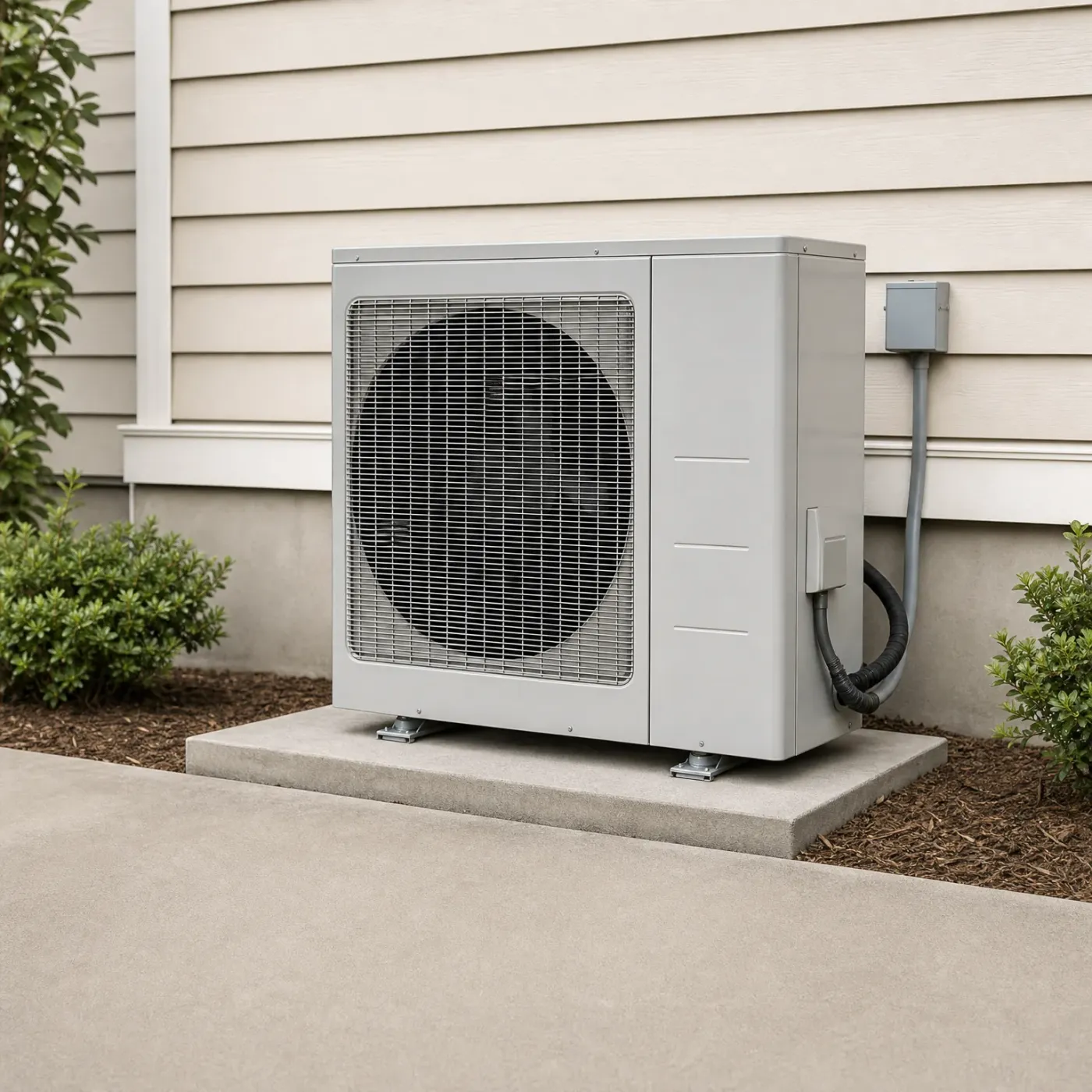
This is what a working heat pump looks like on a cold morning. It sits on its pad, lines running clean to the disconnect, and keeps pulling heat from the outside air without any backup coil switching on.
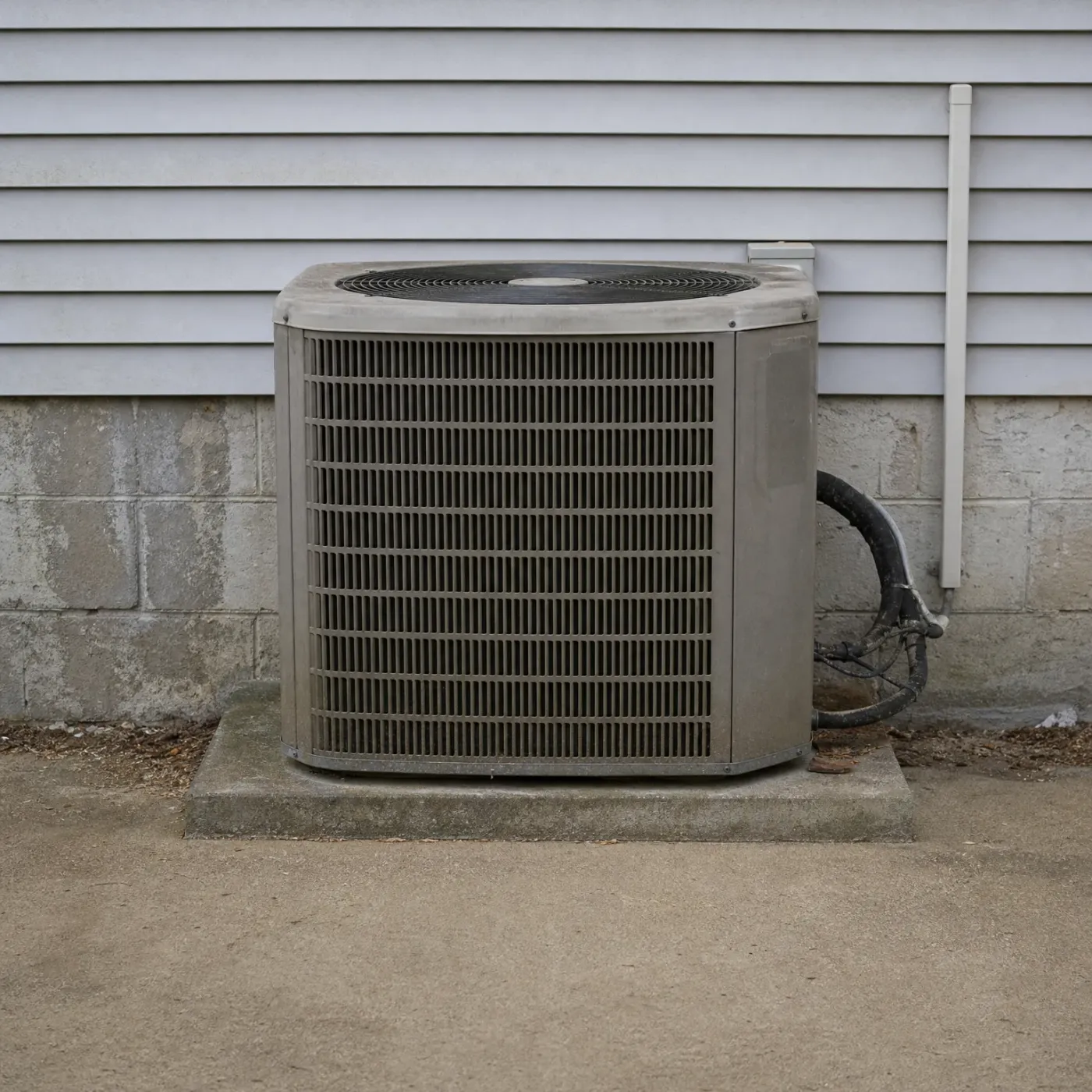
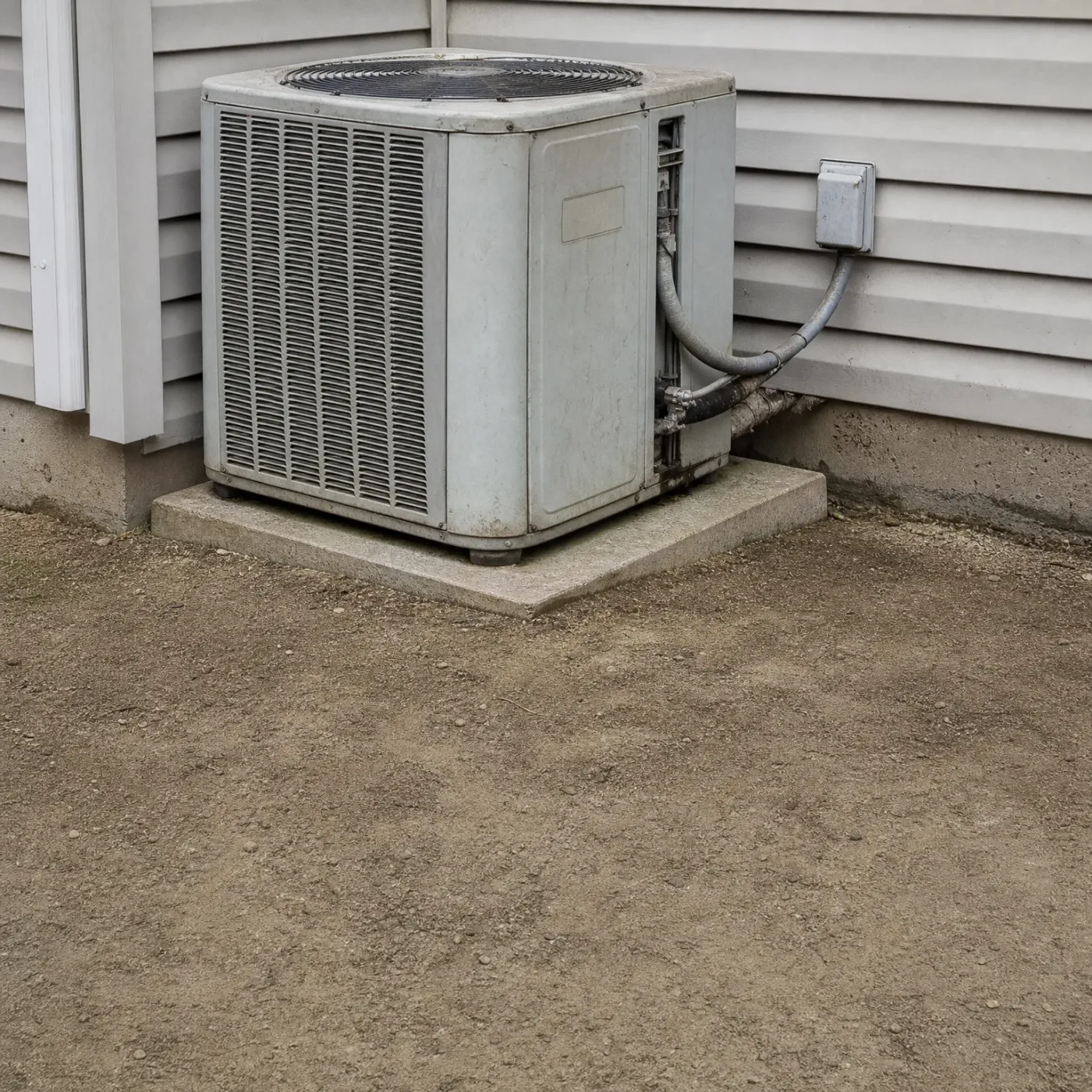
Weathered lines, an aging cabinet against the block foundation. A heat pump this worn works harder for the same heat, and on the coldest mornings it may lean on backup more than a newer unit would.
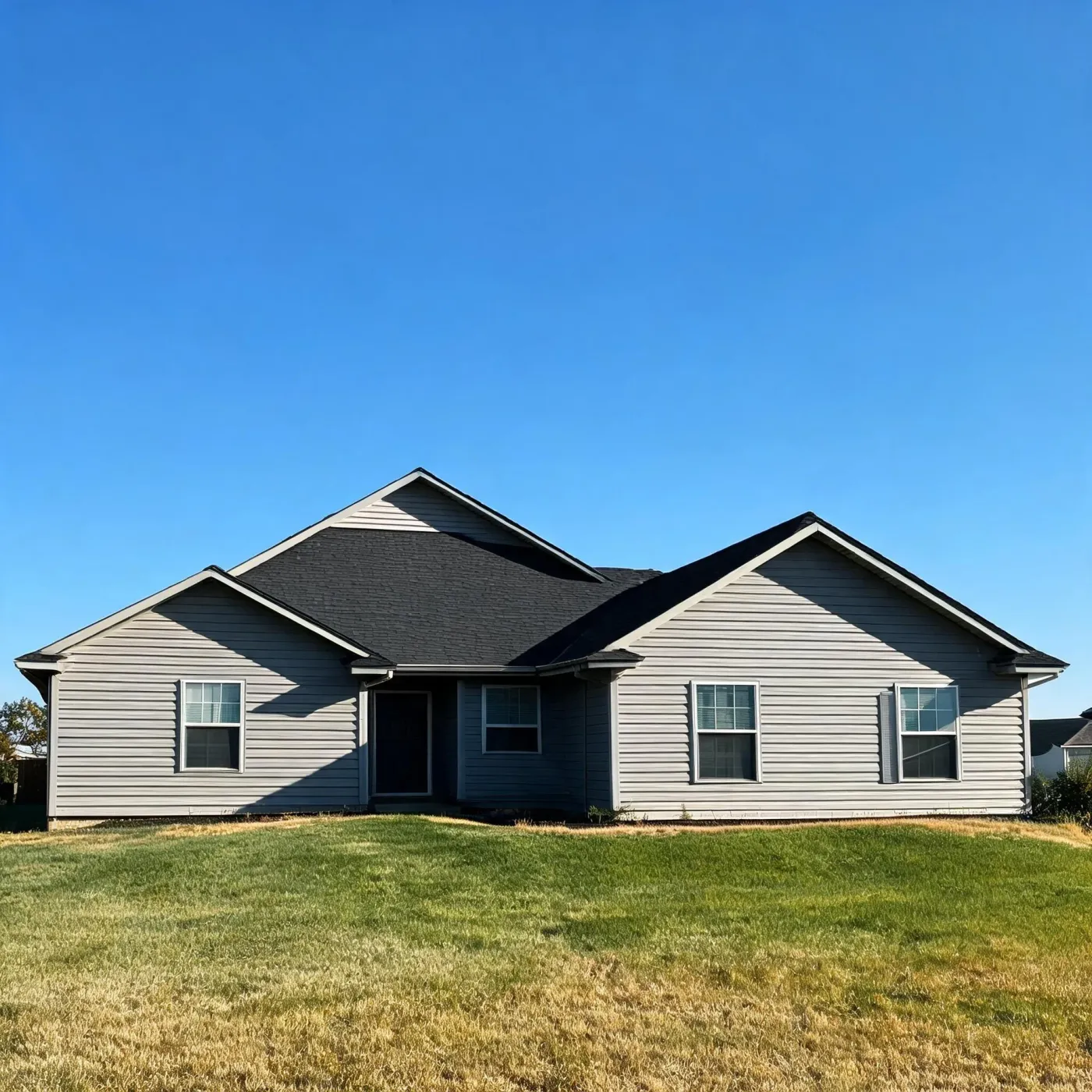
Summer air here averages a dew point of 47°F, according to NOAA climate data for Arizona. That's dry air, and it matters for how your heat pump runs come winter too. A heat pump pulls moisture out of the air as part of cooling, and dry air like this means it isn't working hard to wring out humidity the way a unit in a muggy state would. Less moisture in the system, less strain on the coil. It's one reason the backup coil in your air handler stays off most winter mornings. The dry air that makes summer feel manageable here is part of what keeps your heat pump carrying the load on its own through winter too.
NASA POWER T2MDEW county cells weighted by homes
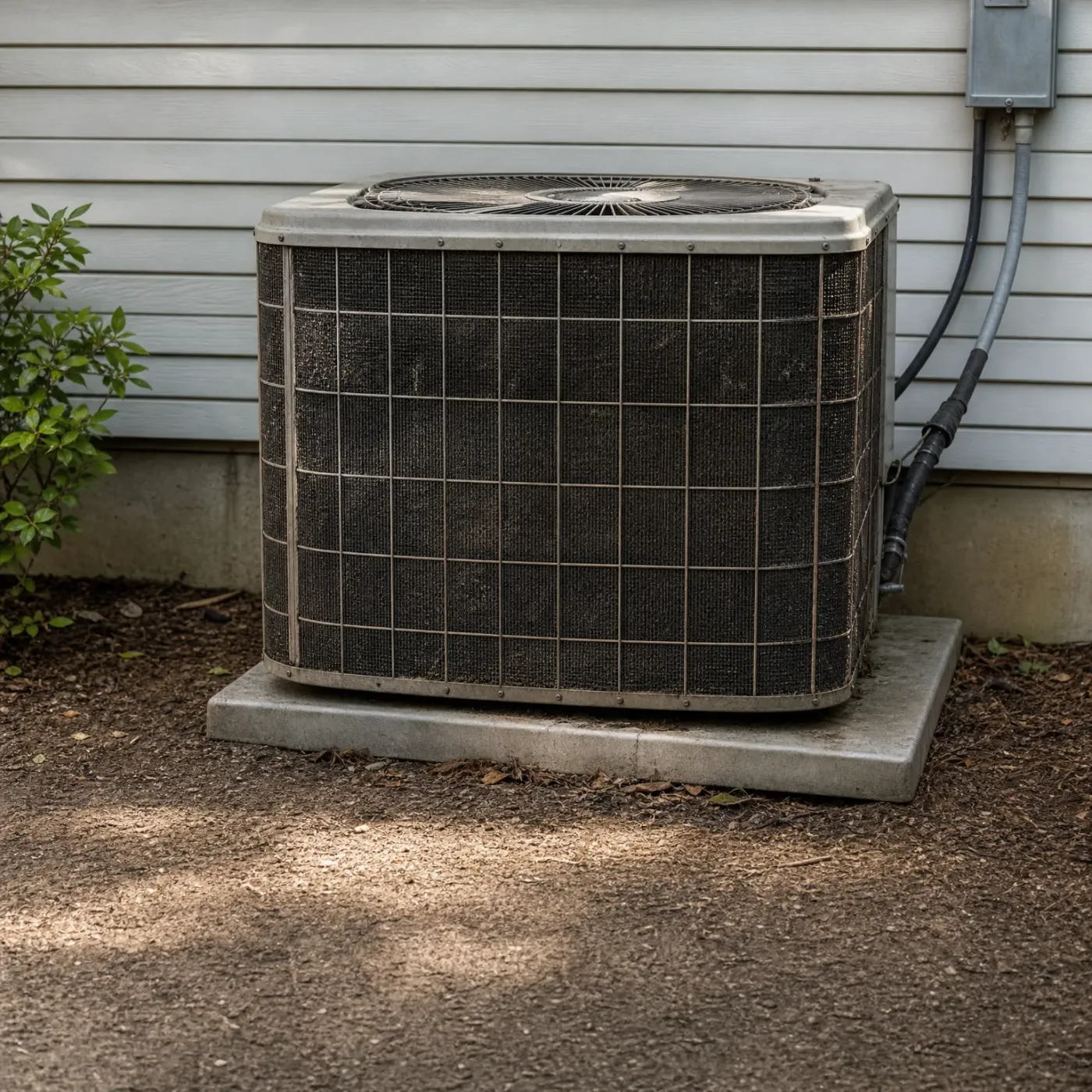
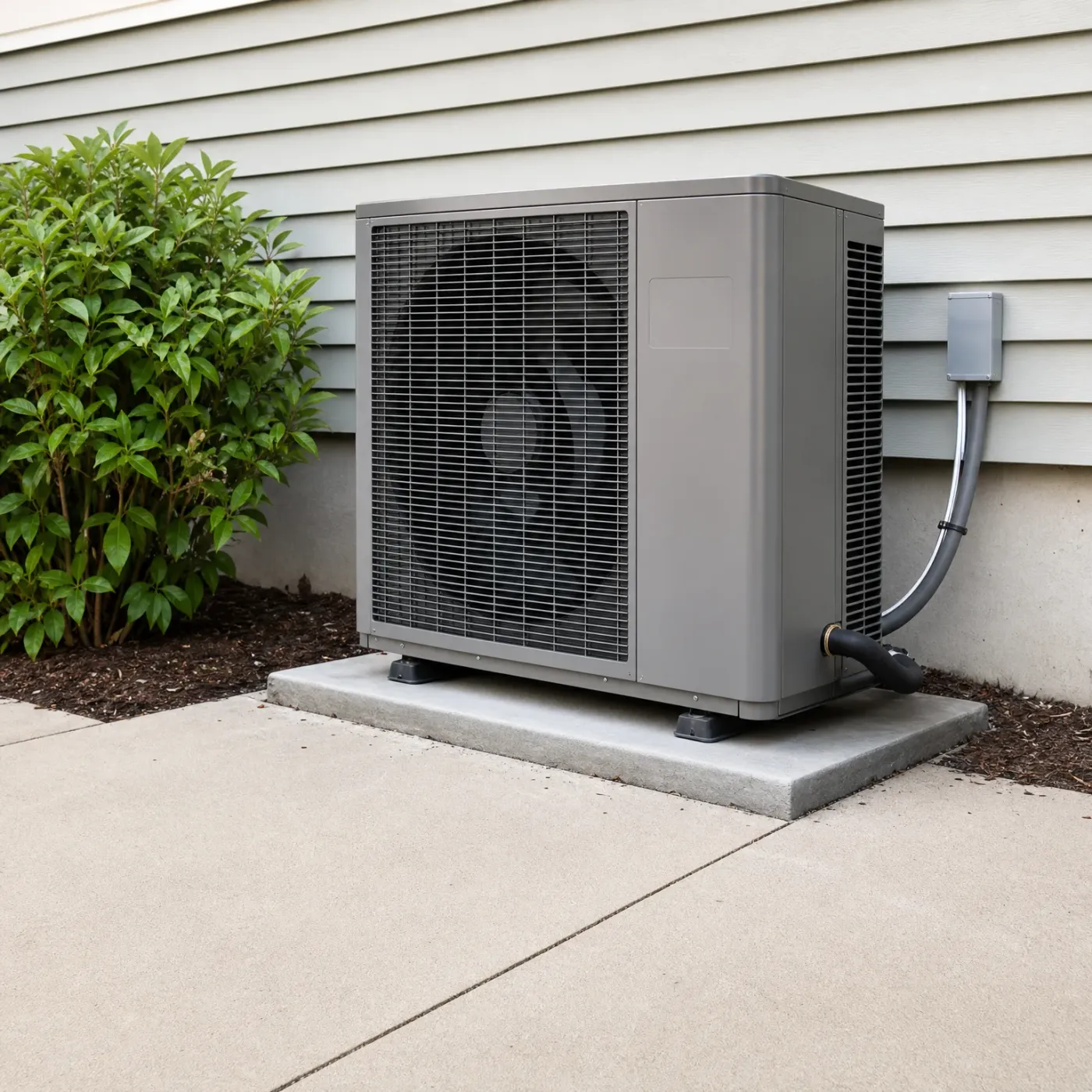
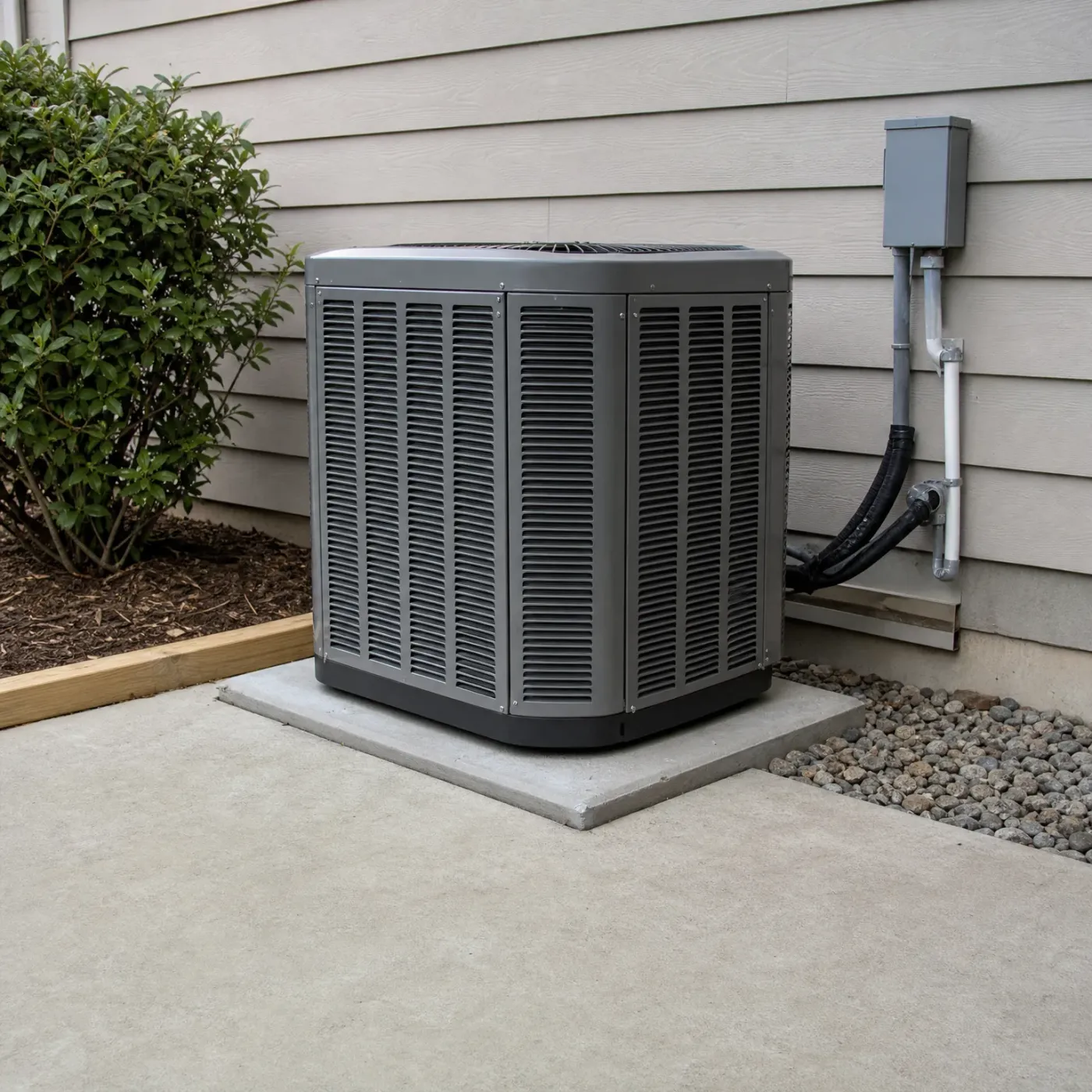
Lines run neat from the pad up to the disconnect, nothing iced over, nothing straining. This is a heat pump pulling heat from outside air the way it's built to, even on a cold morning, with no backup coil needed to make up the difference.
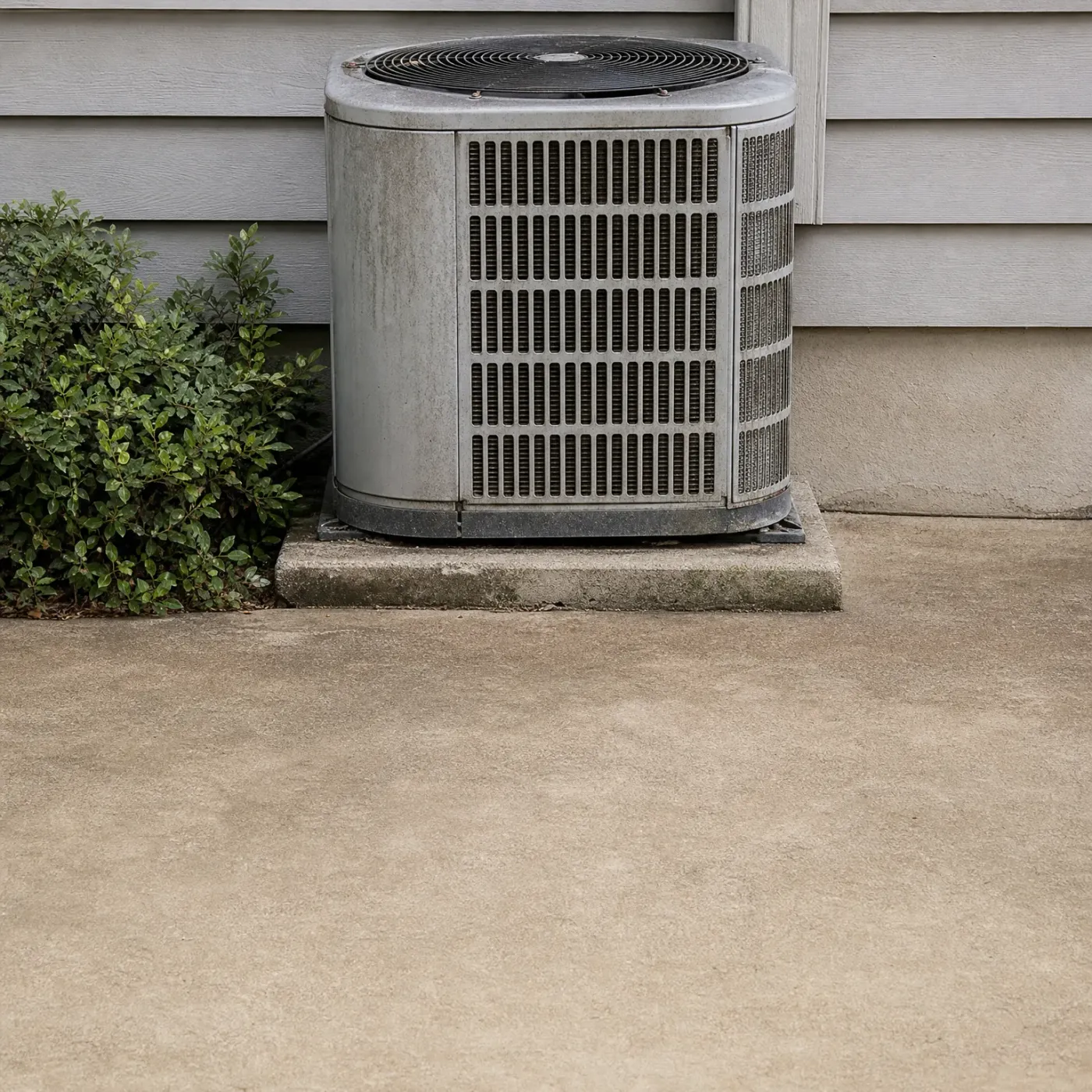
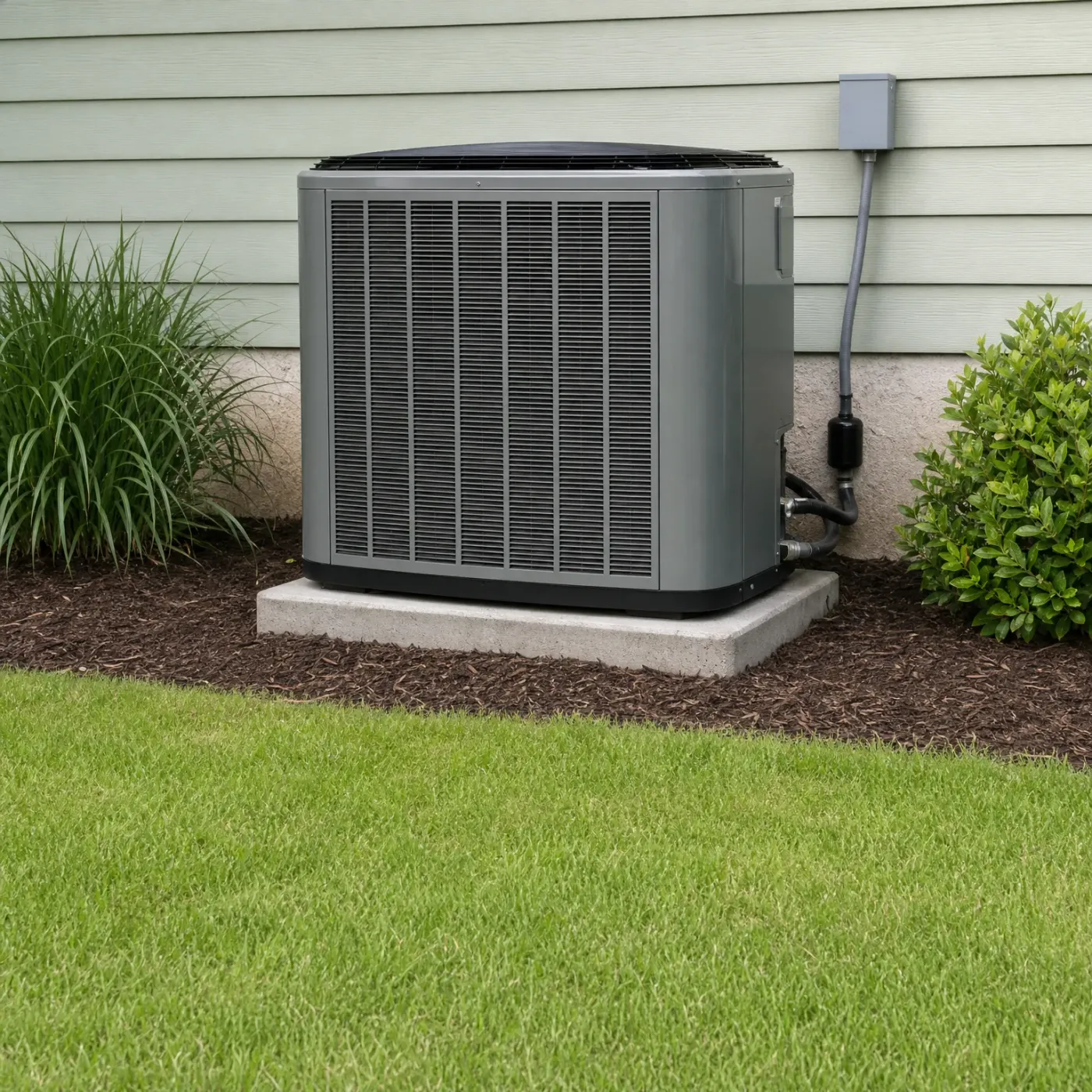
Bare concrete, no gravel, no real clearance around the cabinet. A unit kept like this loses ground faster once the air gets cold, and it leans on backup heat sooner than one that's been kept up. Worth a look before winter.
At 15.26 cents a kilowatt-hour, that backup coil costs something to run when it kicks on, since it's straight electric resistance heat. The good news is you're rarely asking for it. On most winter mornings here, your heat pump covers the house on its own.
EIA-861 2025 statewide residential average
Arizona winters don't ask much of a heat pump. The cold mornings that would give it trouble are short and few, and most of the season it just runs, quietly pulling heat from outside air the way it's built to. Backup heat is there for the handful of nights that drop near freezing, not for the whole winter, and a thermostat only calls on it when the house actually needs the help. That's the shape of it: a heat pump doing the job on its own most mornings, a coil standing by for the rest.
Where this turns into a real decision is when a unit stops holding its own. One that's lost ground, whether from age or a problem that's crept in, leans on that backup coil more than it should, and that shows up on the power bill since the coil runs on straight electric resistance heat. A heat pump working the way it's supposed to barely touches it. Worth checking, if you've noticed the vents running cooler than usual or the system working longer than it used to on an ordinary cold morning.
If you're deciding whether your setup needs backup heat at all, or whether the one you've got is sized right for how your heat pump is running now, that's a question worth putting to someone who can look at your system directly. Send the form and the search for the right contractor is off your plate. They'll have what they need to look at your home specifically and tell you where you stand.
A local pro for your heat pump installation