Why your heat pump is blowing lukewarm air in Arizona
Lukewarm air from a heat pump in Arizona summer heat usually means it's stuck in a mode that can't keep up, or something's stopping it from pulling heat out of the air the way it should. This page walks through what tends to cause it and what to check first. A local contractor who services this equipment all summer can tell you what's actually going on in your system.
Lukewarm air from your heat pump usually means it's stuck in a low stage or backup mode, or it's low on refrigerant and can't pull enough heat out of the air to cool the house. A heat pump cools by moving heat out of your home, and if the refrigerant charge is low, the outdoor coil can't absorb enough heat to do that job right, so what comes out of your vents feels closer to room temperature than cold. It can also mean the reversing valve is stuck between heating and cooling, or the outdoor unit's coil is dirty or blocked, which matters more here since the system runs hard through long stretches of 100-plus days and has less room to coast. Either way, the unit is running but not actually cooling, and in Arizona summer that gap shows up fast. It needs a contractor to check the charge, the valve, and the coil to find which one it is.
Running the way it should
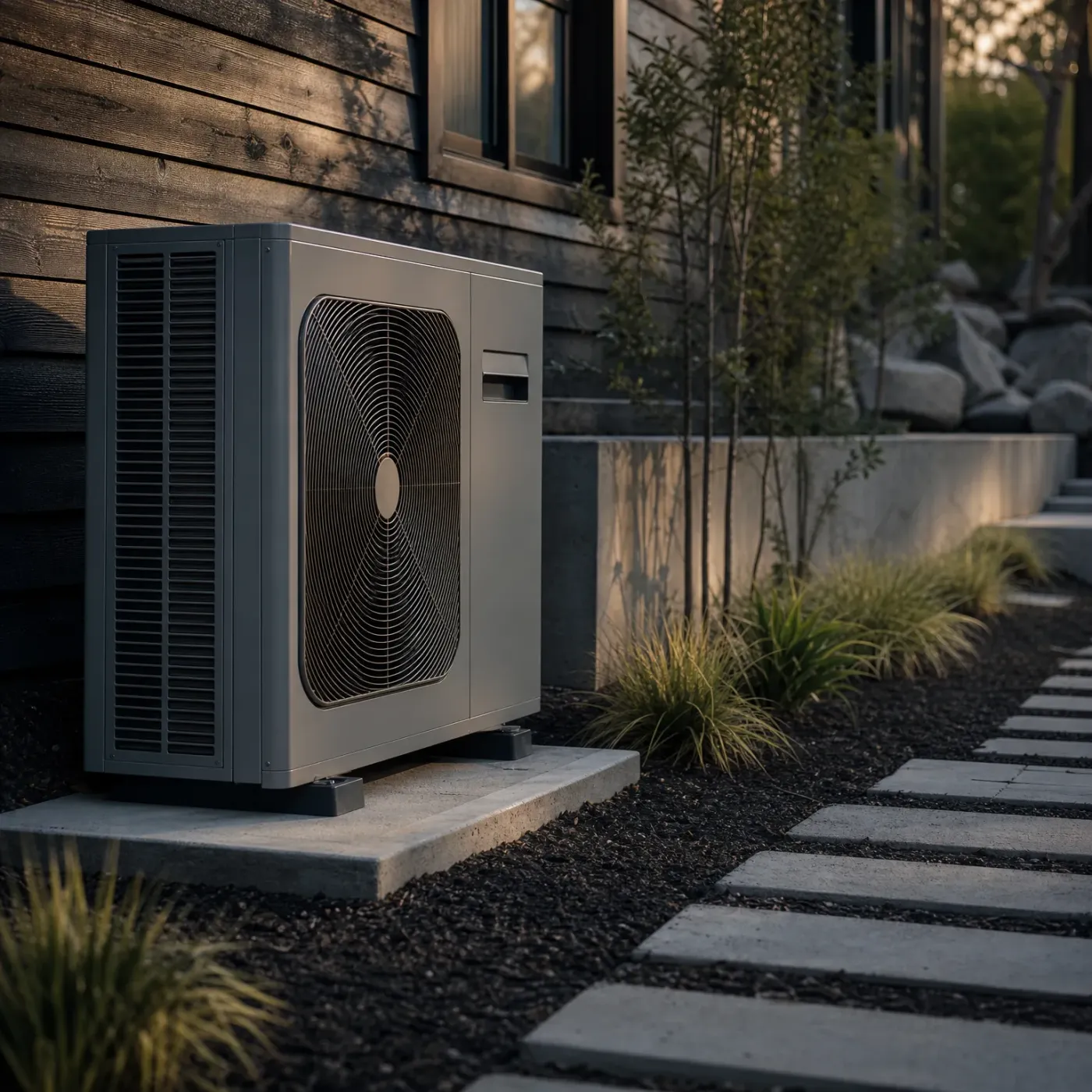
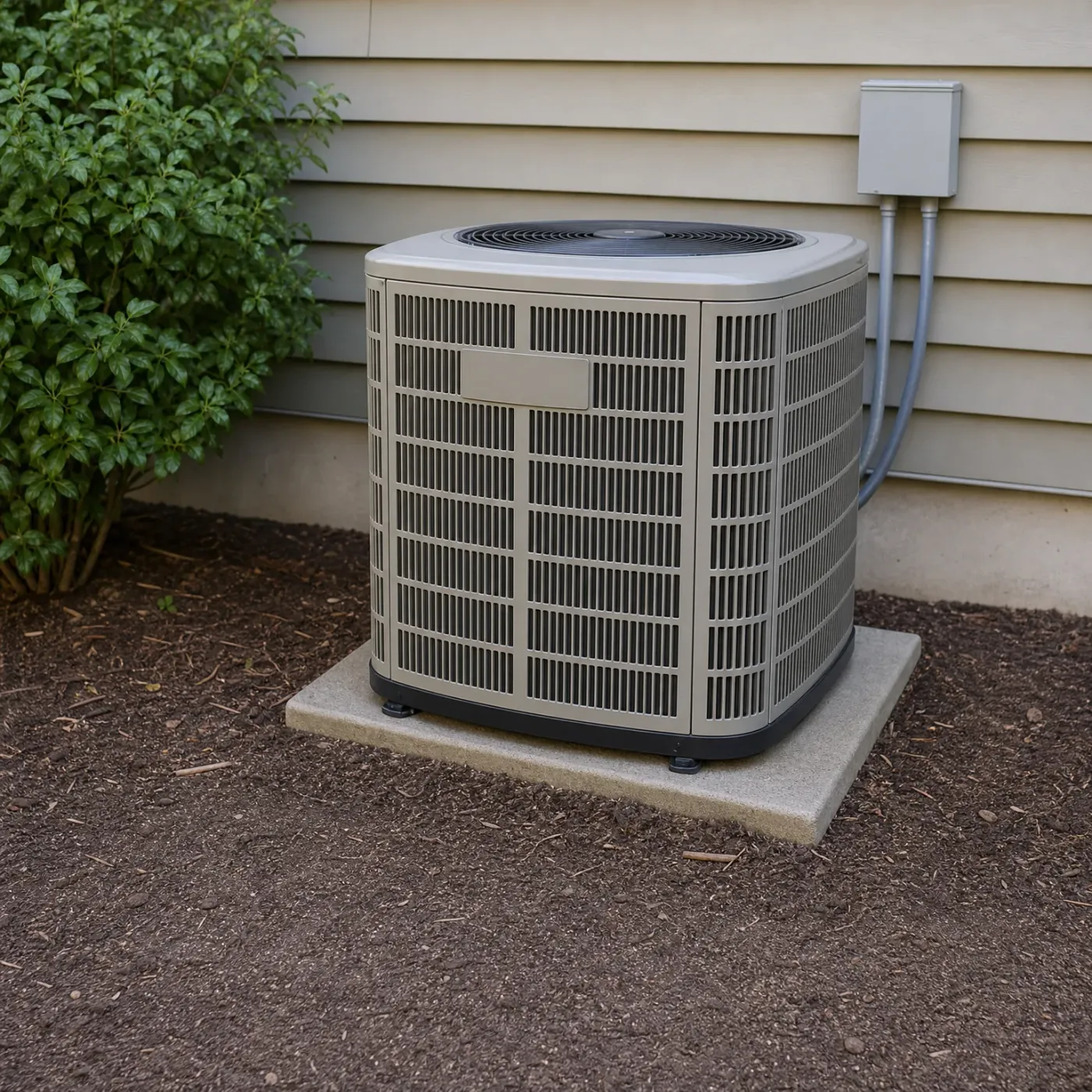
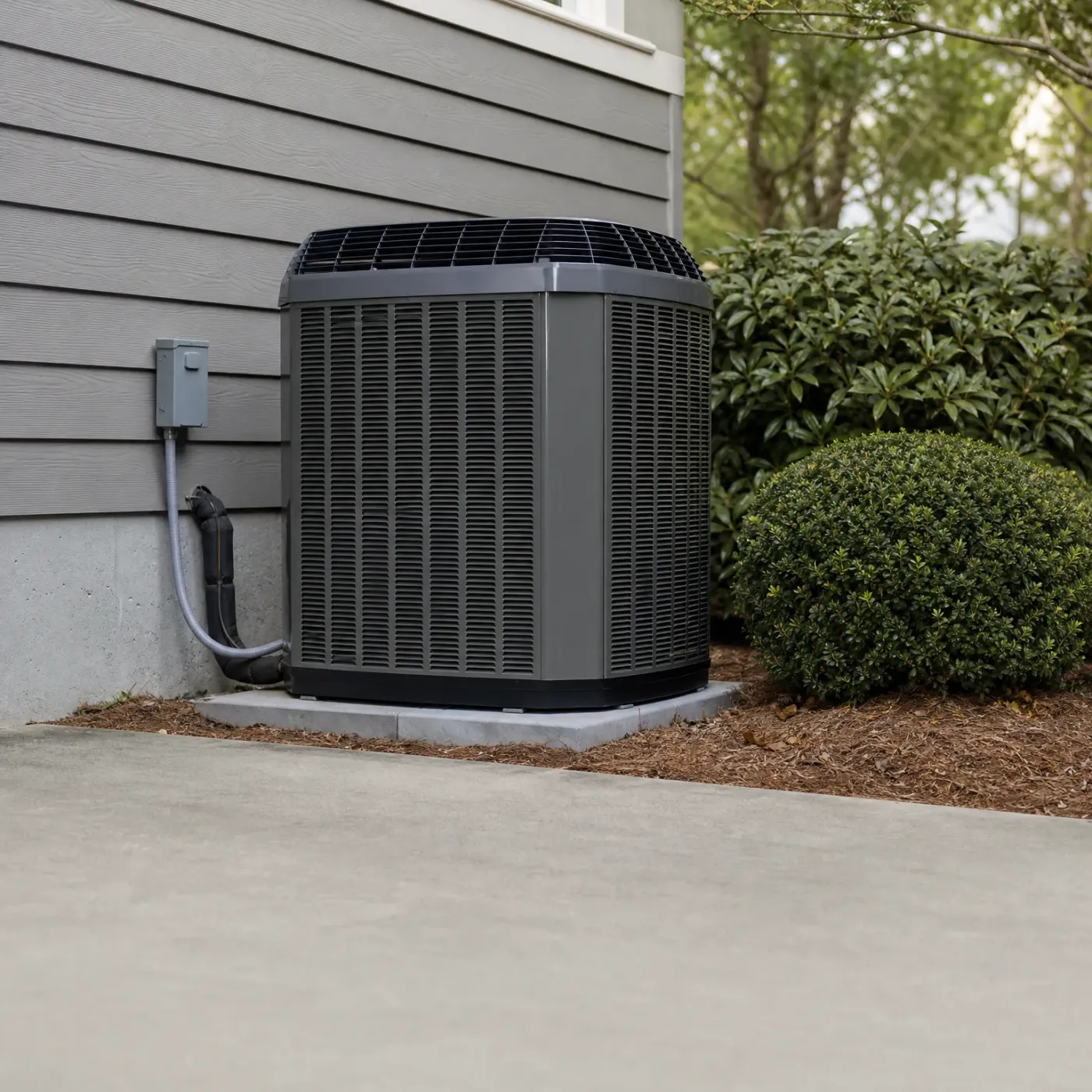
The outdoor unit sits on its pad, the conduit running up to the disconnect box. When a heat pump is cooling properly, this unit runs steady for long stretches on a hot Arizona afternoon, and the air coming out of your vents is noticeably cold, not just moving.
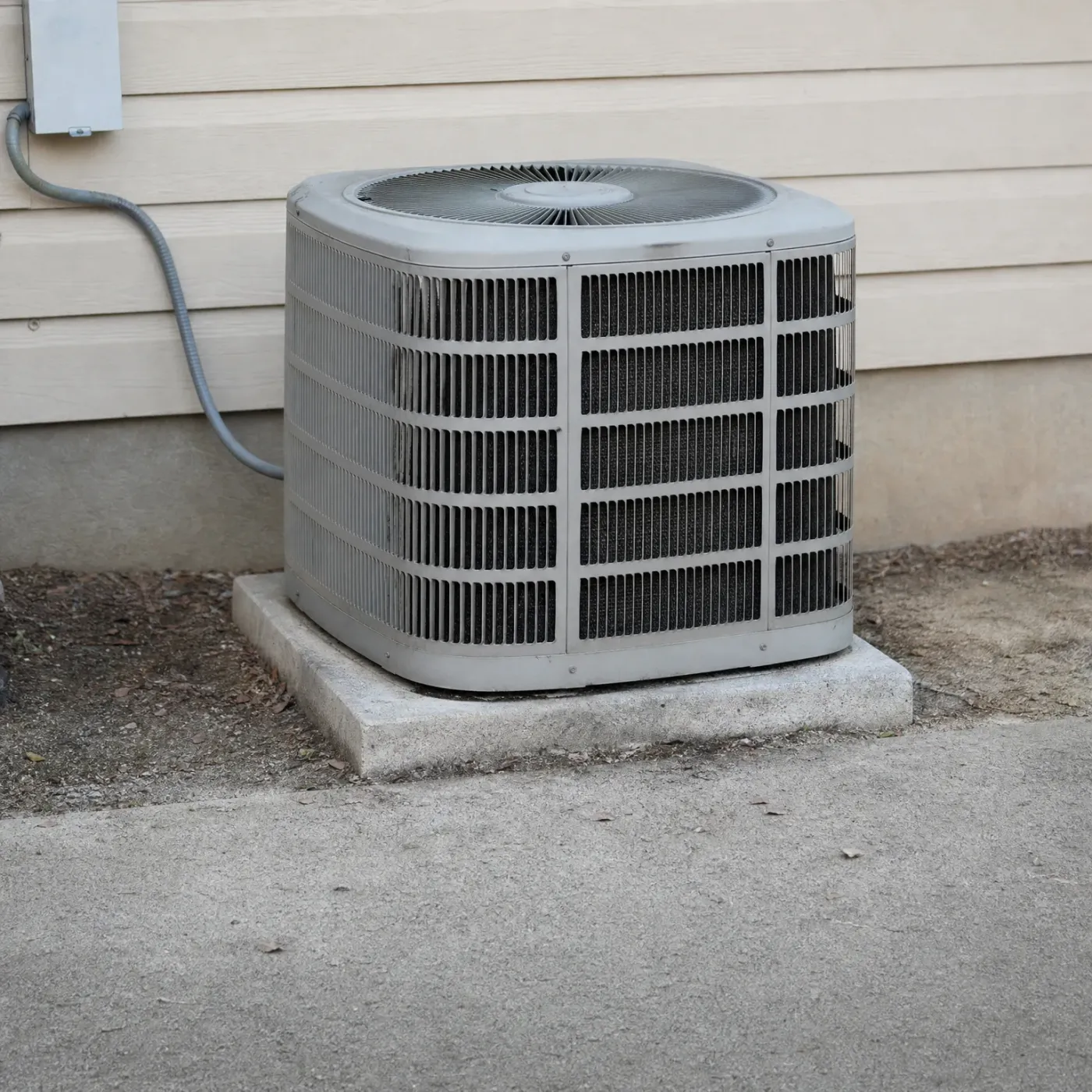
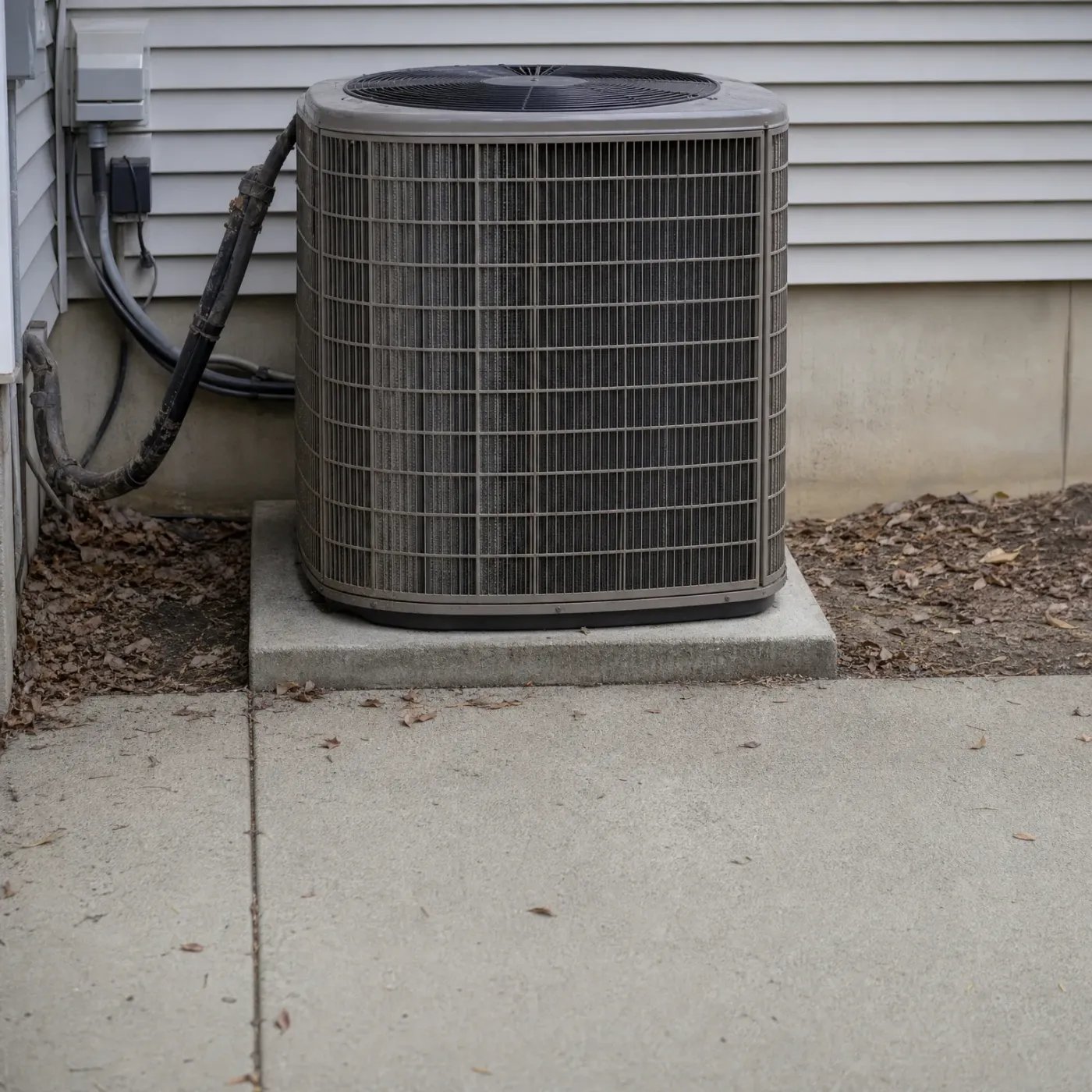
Something's wrong here
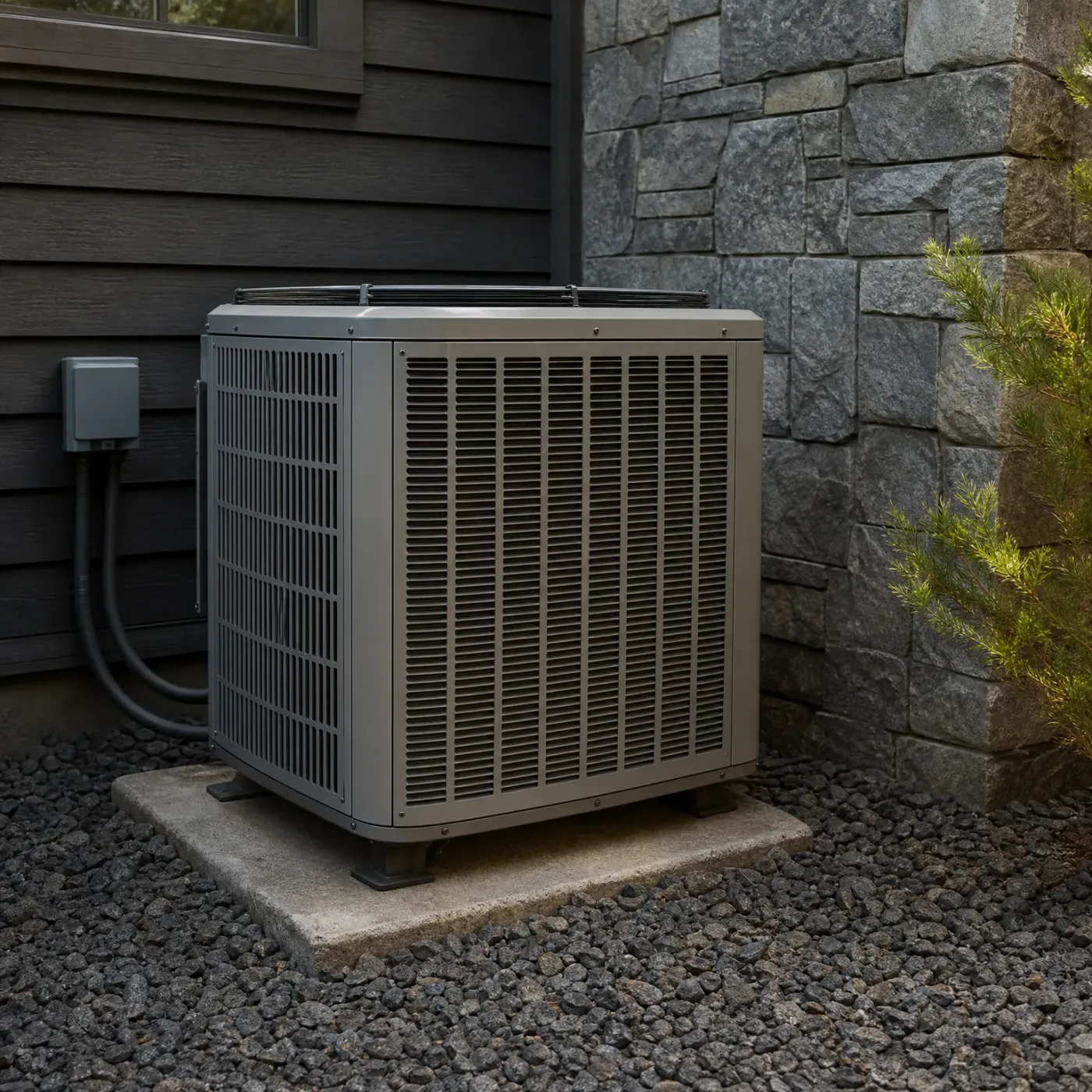
Same kind of unit, same setup, but this is where trouble shows up first. If the air is lukewarm, check whether the outdoor unit is running at all, whether the fan is turning, and whether the line running to it feels frosted or unusually warm.
What's Actually Happening Inside
A reversing valve tells the system whether to pull heat out of your house or out of the outdoor air, and a stuck valve can leave it cooling halfway.
Low refrigerant charge means less heat gets carried off every cycle, so the air at the vent reads warmer than the thermostat setting.
A failing run capacitor can let the outdoor fan or compressor limp along at reduced output instead of shutting off or running full strength.
Many systems default to a lower stage or electric backup when a sensor or control board flags a fault, which reads as warm air even though the unit is running.
A dirty outdoor coil can't shed heat fast enough in Arizona's dry heat, so the refrigerant stays warmer than it should through the whole cycle.
A frozen indoor coil melts back into airflow that feels lukewarm because it's mixed with air that never got properly cooled.
A heat pump cooling your house is moving heat from inside to outside, and that whole process depends on a handful of parts agreeing with each other. The reversing valve is the switch that tells the system which direction to move heat. If it sticks halfway, the system runs but can't commit to cooling mode fully, and you get air that's cooler than outside but nowhere near your thermostat setting. Refrigerant charge matters just as much. Each pound of refrigerant can only carry so much heat per cycle, so a system low on charge keeps running but keeps falling short, cycle after cycle. The outdoor coil has to shed that heat into the air outside, and in Arizona's dry summer heat, a coil caked with dust does that poorly, which keeps the refrigerant warmer through the whole loop. The run capacitor is what gives the outdoor fan and compressor the jolt they need to run at full strength. When it's weakening, those components run slow instead of failing outright, and slow means less heat moved. Control boards complicate things further. Many systems are built to drop into a lower stage or switch to electric backup the moment a sensor reports something off, and from the vent, that shows up as warm air even though the blower is clearly running. None of these fail the same way twice, which is why the fix starts with figuring out which one it actually is.
Your request goes to one pro, not a list of companies.
No fee to send it, and nothing to sign.
Why the outdoor unit matters so much
In Arizona, the outdoor unit is working against serious heat for hours at a time, every afternoon. A coil caked with dust or a fan motor running slow doesn't shed heat the way it should, and the whole system falls behind. The compressor keeps running, but it's moving less heat per cycle than it's built to. That shows up at the vent as air that's cool but not cold. A contractor checking this will usually look at the outdoor coil and fan first, since a unit that can't reject heat outside can't pull it out of your house either.
What the thermostat can tell you
Some thermostats show a small snowflake or a mode label when the system switches to emergency or auxiliary heat strip operation by mistake, pulling warm air instead of cool. On a heat pump, that mode exists for winter, not for an Arizona summer day. If you see it active while you're trying to cool the house, that alone can explain lukewarm air without any refrigerant problem at all. It's worth checking before assuming the worst, since fixing a stuck setting is a different repair than fixing a leak.
Before you get your heat pump repairAfter you get your heat pump repair
Running through a 110 degree afternoon
When it's working, a heat pump keeps pulling heat out of your house hour after hour and the air at the vent stays well below room temperature, no matter how long it runs.
A stuck valve or low charge means it runs the whole afternoon without catching up, your power use climbs, and the house slowly loses ground to the heat outside.
Power costs 15.26 cents per kilowatt-hour statewide
At 15.26 cents per kilowatt-hour, every hour your heat pump runs stuck in a low stage or backup heat is an hour you're paying for power that isn't cooling the house. A repair that gets it pulling heat the way it should is what brings that bill back down.
EIA-861 2025 statewide residential average
Lukewarm air means something specific is wrong, and it's fixable
A heat pump blowing lukewarm air in an Arizona summer is telling you it's stuck in a stage it can't cool from, or it's lost the charge it needs to pull heat out of the house. Either way, the unit is running and using power without doing the job. That's worth sorting out before the next 110 degree afternoon, not after it.
Finding which one it is means someone checking the reversing valve, the charge, and the outdoor coil, in person, with gauges. A contractor who works on heat pumps in this state through the summer has seen this exact complaint plenty of times and knows where to look first. Get matched with one who's licensed and local, and you'll hear from that contractor directly, not a handful of companies competing for your call.
Heat Pump Repair
Matched to your heat pump job
Step 1 of 3: Equipment
A local pro who knows heat pumps gets your details and gets in touch.
Send the request today and stop worrying about who to call.
Send the request and finding a pro stops being your problem.
One form replaces the calls you'd make to find a heat pump pro.
Describe what your heat pump is doing once, in one form.