Why your heat pump is leaking water in Arizona

Step 1 of 3: Equipment

Water dripping from your indoor unit usually means the condensate drain line is clogged or the drain pan has cracked. Arizona air is dry, so your heat pump isn't pulling much moisture out of the house, but it still produces condensation whenever it runs in cooling mode, and that water has to go somewhere. Algae, dust and debris build up inside the drain line over time and block it, so the water backs up and spills over the pan instead of draining outside. A cracked or rusted pan does the same thing even with a clear line. Less often, the leak comes from a dirty air filter or low refrigerant, both of which can cause the indoor coil to ice over and then flood the pan when it thaws. Left alone, a clogged line or a bad pan can soak the drywall, subfloor or ceiling under the unit, so it's worth having someone look at it before that happens.

  1. Warm air passes over the indoor coil and cools

  2. Moisture in the air condenses on the cold coil

  3. Water drips off the coil into the drain pan

  4. The pan channels water into the condensate drain line

A smiling man in a gray long-sleeved shirt stands in a kitchen looking to the side, with open shelves of dishes, a white mug on the counter, a potted plant, and a view through a doorway into a living room.
A smiling bearded man in a green sweater sits at a white marble kitchen island with a mug, potted plant and bowl of fruit, in a bright white interior with open shelving and an arched doorway.
A smiling man with dark curly hair and a beard, wearing a dark green knit sweater, stands at a white marble kitchen counter with a dark blue mug, with open shelving, pendant lights and a houseplant behind him.
A smiling man in a green ribbed sweater stands behind a wooden table holding a ceramic mug of coffee in a kitchen with white subway tile, shelves of potted plants, and a bowl of fruit.

Why the drain clogs so often

The condensate line is a narrow pipe, often less than an inch across, and algae and dust build up along its walls every time water sits in it. In Arizona, dust is the bigger problem. Dry air means a lot of fine grit moving through the house, and some of it ends up on the coil and washes into the pan with the condensation. Over time that grit settles in the low points of the drain line and narrows the path until water backs up instead of draining out. A line that drained fine last year can clog this year without anything else on the system changing.

What a cracked pan means

The drain pan sits under the indoor coil and catches whatever drips off it, so any crack or corrosion spot becomes a leak path even when the drain line itself is clear. Pans are usually metal or plastic, and both wear differently. Metal pans rust through at the seams after years of standing water. Plastic pans crack where they flex near the coil mounts. Either way, the leak only shows up when the system is running and producing condensation, which is why it can seem to come and go rather than being constant.

A smiling man with dark curly hair in a navy t-shirt sits on a gray couch indoors, with a large-leafed plant and a window in the background.
A bearded man in a plaid flannel shirt stands in a kitchen looking out a window toward snow-covered shrubs, with a steaming mug on the windowsill and potted plants on a shelf behind him.

Leave it, and the pan keeps filling. Most pans have a float switch that shuts the system off once water gets too high, so you lose cooling before you lose a ceiling. Some don't, and the overflow finds drywall instead.

Clear the clog and the water stops because the path it needs is open again. A contractor can also tell you whether your system has a float switch, and if not, whether one is worth adding so the next clog shuts off the unit instead of the water finding somewhere else to go.

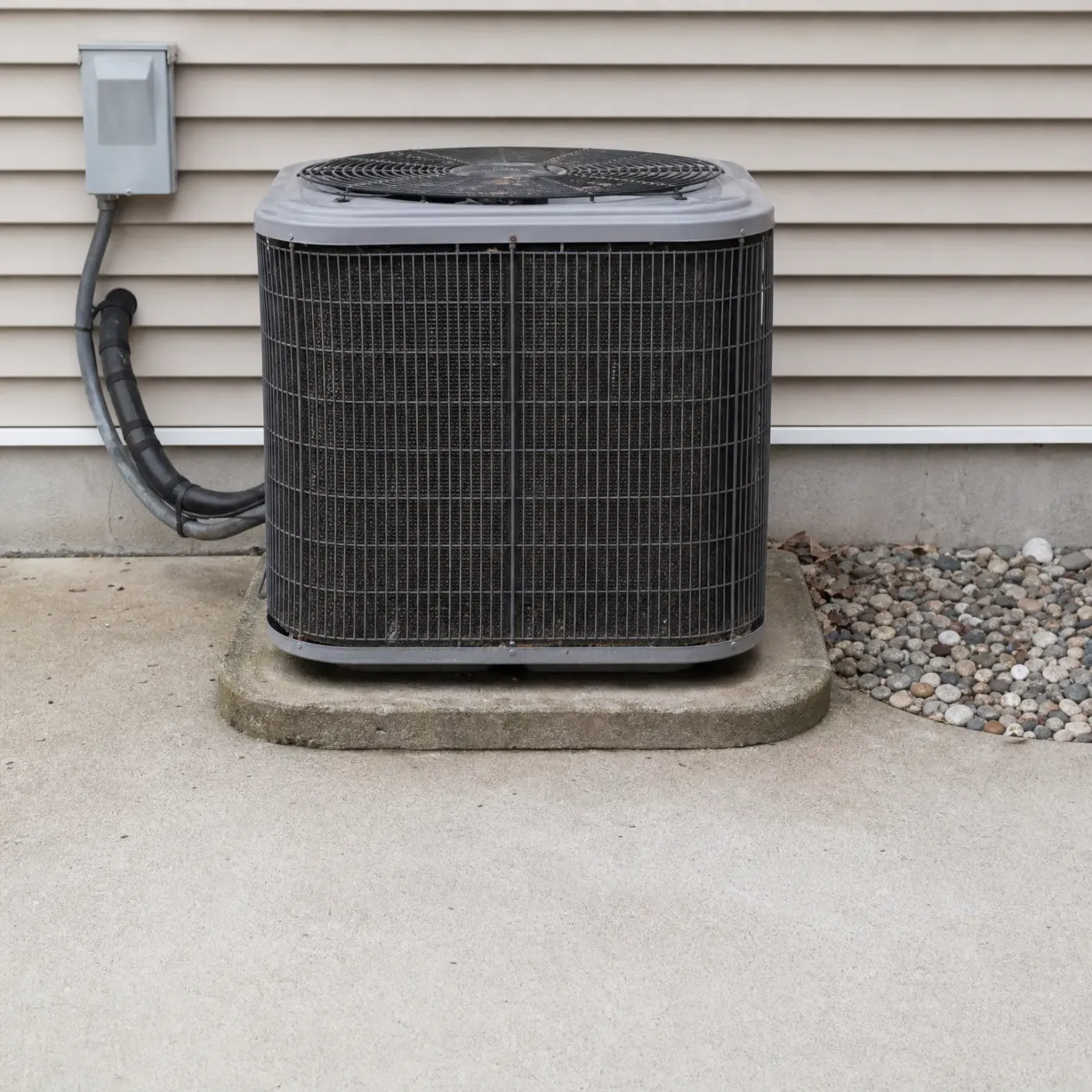
An outdoor air conditioner condenser unit on a concrete pad beside a house with beige vinyl siding, with a gray electrical disconnect box and insulated refrigerant lines on the wall and river rock to the right.
Before you get your heat pump repair
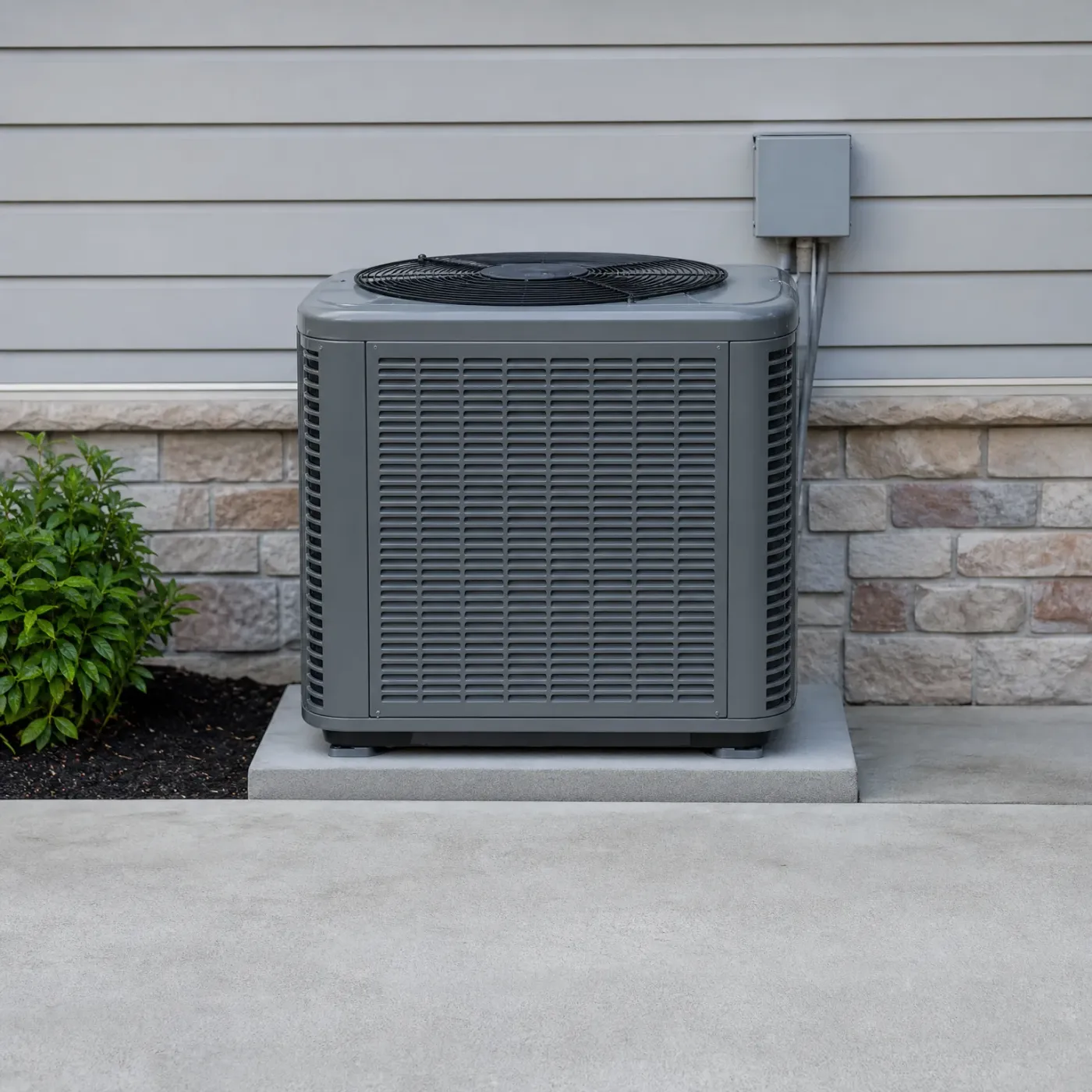
A gray outdoor condenser unit sits on a concrete pad against a house wall with horizontal siding above a stone veneer base, with an electrical disconnect box and conduit on the wall and a leafy shrub in mulch to the left.
After you get your heat pump repair

Hand off the heat pump problem

A dripping heat pump doesn't wait for a convenient week. In Arizona heat, losing cooling for even a day while you sort out who can come look at it is its own kind of problem, and a float switch cutting the system off makes that worse, not better. The alternative is calling around to a handful of repair outfits, explaining the same leak and the same water stains over and over, then waiting on quotes to compare while the pan keeps filling. Sending the form instead means you stop being the one chasing that down. One contractor gets your situation, not five, and from there it's their job to sort out whether it's the line or the pan, not yours to find out who's even available. The water on your floor or your ceiling is the kind of thing that gets worse the longer it sits. Handing off the search for help is the part you can do something about right now.

What the Leak Is Doing to Your House

  • A water stain spreading across the ceiling below a closet or hallway unit usually means the pan has already overflowed once.
  • A musty smell near the indoor unit points to water sitting in the drain pan or line longer than it should.
  • If the system shuts off on its own during the hottest part of the day, a float switch may have tripped from a full pan.
  • Warped baseboards or soft drywall near the unit mean water has been finding its own way out for a while.
  • A puddle that keeps coming back in the same spot, even after you wipe it up, means the clog or crack is still there.
  • Letting it run another week in Arizona heat risks the drywall, the flooring, and the cooling itself if the switch finally cuts power.

A closet or hallway unit sits close to drywall and flooring, and that's where the damage shows up first. Water that overflows the pan doesn't stay contained. It finds the nearest seam, the nearest soft spot, and works its way in before you ever see a puddle. By the time a stain reaches the ceiling or the baseboard swells, the water's been getting in longer than the stain suggests.

The smell is often the earliest sign, and the easiest to miss. Standing water in a pan or a blocked line doesn't need much time to turn musty, especially sealed up in a closet with no airflow. If you notice it before you notice any water, that's the system telling you early.

A float switch is supposed to protect you from the worst of it by cutting power before the pan spills over. That's a good thing for your walls and a bad thing for your afternoon, especially if it trips when it's over 100 degrees outside. Not every pan has one, and the ones that don't just keep filling until the water finds its own way down through the ceiling or along the wall.

A puddle that keeps showing up in the same spot isn't a new leak each time. It's the same clog or crack, still there, still draining wherever it can. Wiping it up buys you a day, not a fix.


Power costs 15.26 cents per kilowatt-hour statewide

At 15.26 cents a kilowatt-hour, running your heat pump longer than it needs to costs you every day it happens. A clogged drain line doesn't raise your bill by itself, but a float switch cutting the system off means you're left without cooling until the water problem gets sorted.

EIA-861 2025 statewide residential average

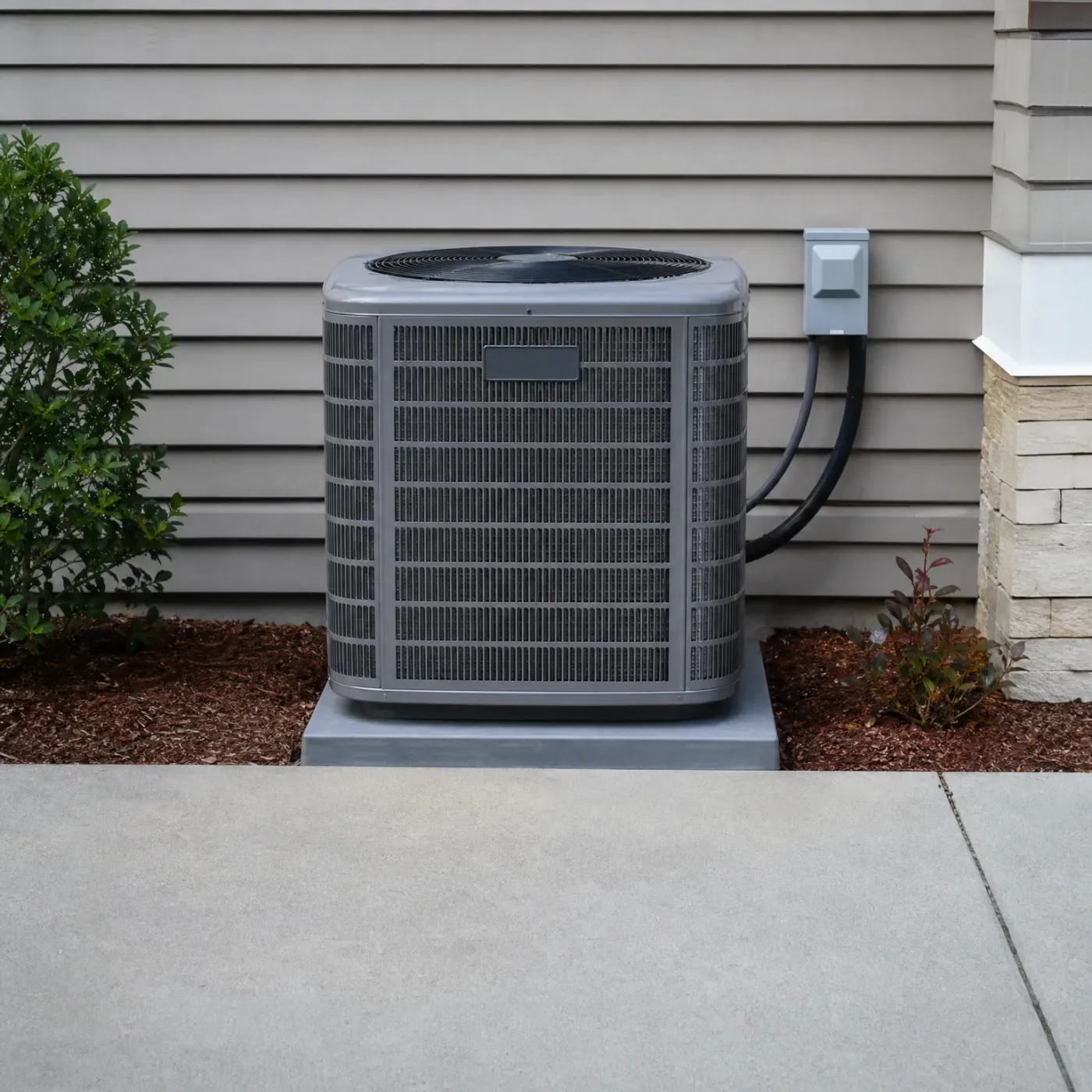
A gray outdoor condenser unit sits on a concrete pad beside a house with horizontal lap siding, with a wall-mounted disconnect box and refrigerant lines, mulched beds and a shrub nearby, and a concrete walkway in the foreground.

Running clean

This condenser sits on its pad doing what it should, cycling on and off through the heat of the day without a drop anywhere near it. The disconnect box and conduit are dry. Whatever drain line runs inside is keeping up with the condensation the indoor coil makes.

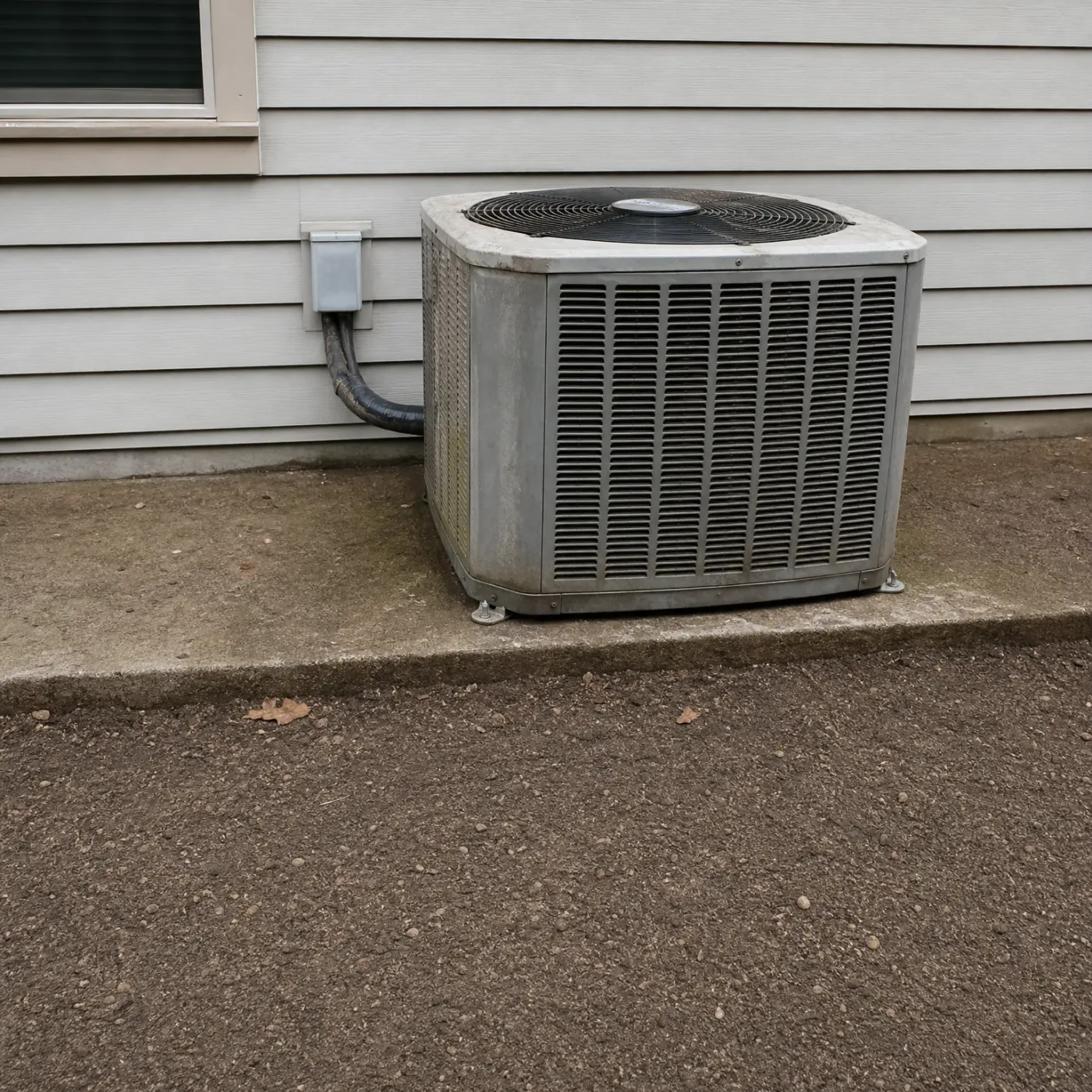
An outdoor air conditioner condenser unit on a concrete pad beside a light gray vinyl-sided house, with an electrical disconnect box and conduit on the wall and bare soil in the foreground.

Something's off

Nothing about this unit looks wrong from the outside, but a wet patch near the indoor coil or a damp spot on the ceiling below it points back here. The refrigerant lines and disconnect are fine. The problem is the water that never made it outside.

A closed silver laptop and a ceramic mug of dark coffee sit on a wooden table in front of two chair backs, with a kitchen counter, tiled backsplash, wooden cutting boards, a vase of greenery and a potted plant by a window behind.

A clogged line or a cracked pan, and nothing more mysterious than that

Water on the floor or a stain on the ceiling below your indoor unit comes down to one of two things. Either the drain line is blocked and the pan is overflowing, or the pan itself has cracked and can't hold water anymore. Dust is the main reason the line clogs in Arizona, since dry air carries more of it through the system than humid air would. A float switch may have already cut your cooling off to keep the overflow from spreading, which is its own problem in the heat.

Either fix means someone has to open the unit, find which of the two it is, and clear or replace what's failed. That's not a guess you want to make yourself, and it's not a call you want to spend an afternoon making either, ringing around to find a contractor who's free, explaining the dripping and the stain and the shutoff all over again to whoever finally answers, then doing it again to compare what they quote you. Send the form instead and that part of it is off your plate.

Interior corner of a room with a window and sheer curtain at left, a gray upholstered sofa with a cushion at right, and a round wooden table holding stacked books and a round vase with an olive branch.
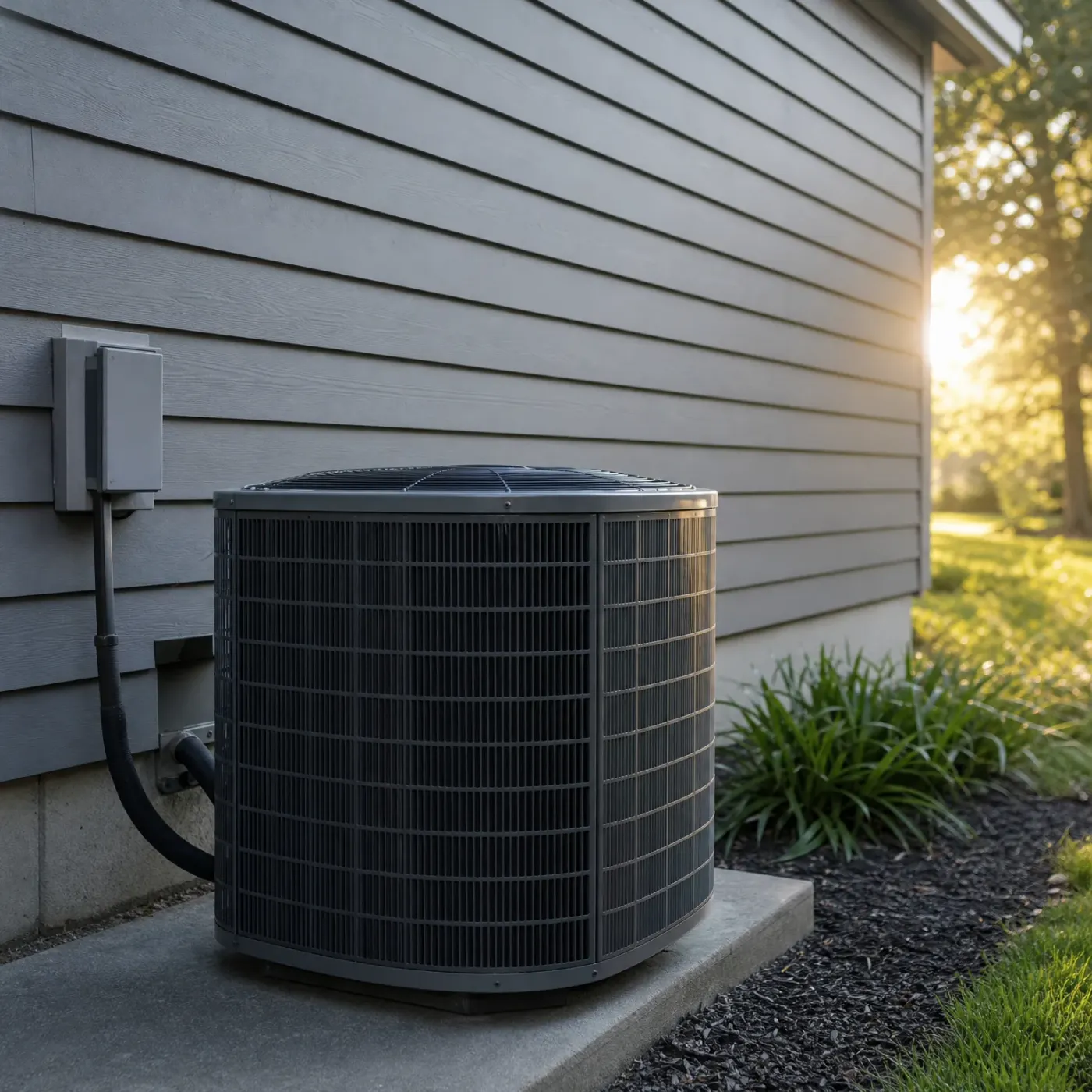
An outdoor air conditioner condenser unit on a concrete pad beside a gray horizontal-lap-sided house, with an electrical disconnect box and refrigerant line on the wall, grass, shrubs and a tree with low sun behind.

Let someone else find the pro

Hand it over

Describe your heat pump job once, to one pro.

You only hire the pro if you want to.